
How to Style a Saree for an Australian Summer Wedding
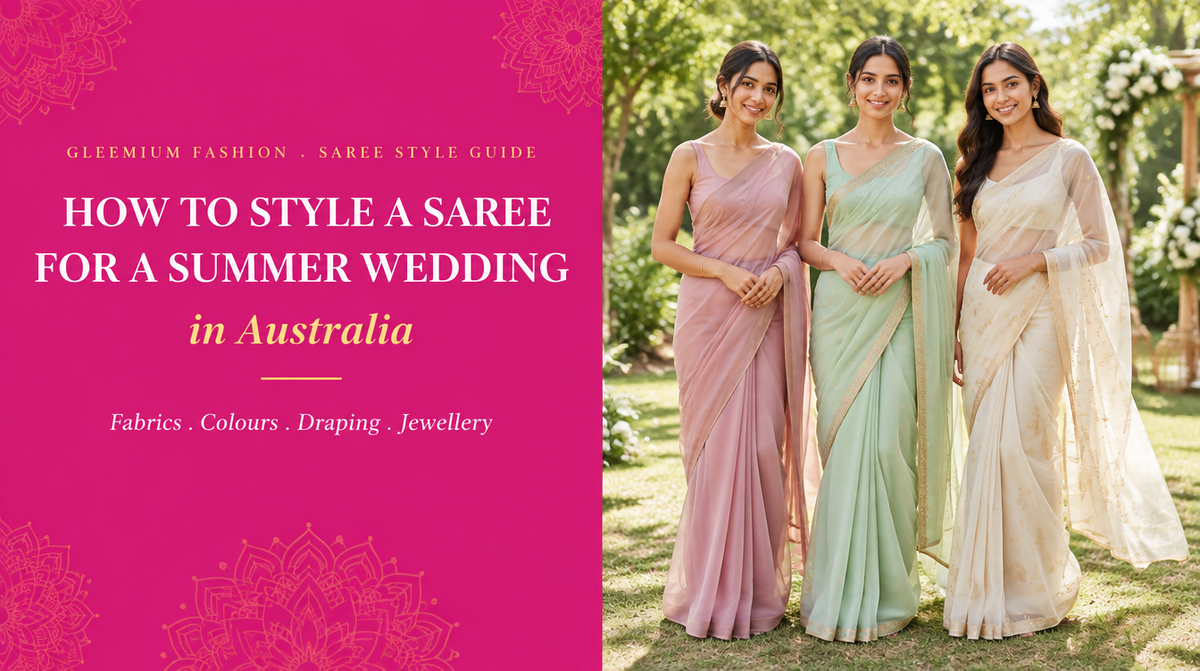
Summary
A saree is a beautiful thing to wear to a summer wedding and a miserable thing to wear badly in 31-degree heat. The difference is almost entirely fabric, drape and how much you are carrying.
This guide starts with the actual temperatures you will be standing in — they vary more between Australian cities than most people expect — then works through fabric, colour, draping and jewellery. Bureau of Meteorology figures and live prices are cited throughout so you can check everything.
Short answer — what saree should I wear to an Australian summer wedding? For a daytime or outdoor ceremony, choose cotton, mul or chiffon in a pastel shade, drape it Nivi style with fewer waist pleats over a cotton petticoat, and keep jewellery to earrings and a few bangles. For an evening reception indoors, georgette or organza gives you more polish without much more weight. Save heavy silk and zari for a winter wedding — or for Melbourne and Hobart, where summer evenings actually cool down.
This Article Covers
- What "summer wedding" actually means in each Australian city
- The five saree fabrics that work in heat, compared
- Colours that photograph well in harsh summer light
- How to drape a saree so it survives a hot day, step by step
- Jewellery, blouse and footwear choices for the heat
- What to pack for an outdoor ceremony
- Frequently asked questions
Key Takeaways
- "Australian summer" is not one climate. January mean maximums run from 31.8°C in Darwin and 31.2°C in Perth down to 26.3°C in Melbourne and 22.2°C in Hobart. Dress for your city, not for the season. [1]
- Evening matters more than you think. January overnight minimums average 21.2°C in Brisbane and 19.5°C in Sydney, so a northern reception stays warm — but 13.6°C in Melbourne and 12.6°C in Hobart, where you will want a shawl. [1]
- The petticoat is the mistake most people make. Satin traps heat and slips; a cotton petticoat breathes and grips the saree far better.
- Fabric order for heat: mul cotton, then cotton, then chiffon, then georgette, then organza. Heavy silk and zari are last. [2]
- Brisbane and Darwin are wet, not just hot. January rainfall averages 115mm in Brisbane and 466mm in Darwin, so an outdoor ceremony there needs a humidity and rain plan. [1]
- A ready-to-wear saree removes the draping problem entirely — pre-pleated and stitched, you step into it. Worth knowing if you are getting ready in heat or helping someone else get ready too. [2]
- Australian weddings peak in spring and autumn, not midsummer — but 2025's most popular date was 25 October, already warm in most of the country. [3]
First, How Hot Will It Actually Be?
Most saree advice treats "summer" as a single thing. It is not. Here are the Bureau of Meteorology long-term averages for January, the peak of the Australian wedding-season heat. [1]
| City | Jan mean max | Jan mean min (evening) | Jan rainfall | What to wear |
|---|---|---|---|---|
| Darwin | 31.8°C | 25.0°C | 466mm | Mul or cotton only. Humid all night |
| Perth | 31.2°C | 18.1°C | 18mm | Hot and dry by day, pleasant evening. Cotton or chiffon |
| Brisbane | 29.2°C | 21.2°C | 115mm | Humid day and night. Chiffon over georgette |
| Adelaide | 29.2°C | 17.1°C | 20mm | Dry heat. Cotton by day, georgette by night |
| Canberra | 28.7°C | 13.7°C | 55mm | Big drop at night — bring a shawl |
| Sydney | 27.0°C | 19.5°C | 80mm | Warm and humid into the evening. Chiffon or georgette |
| Melbourne | 26.3°C | 13.6°C | 40mm | Warm day, cool night. Organza or light silk works |
| Hobart | 22.2°C | 12.6°C | 44mm | Barely a heat problem. Silk is fine |
The Five Fabrics, Compared
Ranked by how they behave in heat, coolest first.
| Fabric | How it wears in heat | Drape | Best for |
|---|---|---|---|
| Mul / mulmul cotton | Coolest. Breathes, absorbs, almost weightless | Soft, needs pinning | Daytime, outdoor, Darwin and Perth heat |
| Cotton and cotton-silk | Breathes well, a little more body | Holds pleats crisply | Daytime ceremony, temple, morning events |
| Chiffon | Sheer and airy, moves with any breeze | Very fluid, slips — pin generously | Garden and beach weddings, humid climates |
| Georgette | Light but slightly denser than chiffon | Flows beautifully, more forgiving | All-day wear, ceremony into reception |
| Organza | Light in weight but structured — less airflow | Holds its shape, sculptural | Evening reception, air-conditioned venues |
| Heavy silk, zari, brocade | Hot and heavy. Handsome, but you will feel it | Stiff, substantial | Melbourne and Hobart evenings, indoor functions |
For reference, our own saree range currently runs 35 cotton and mul styles (A$45–A$140), 19 chiffon and chinon (A$54–A$130), 22 georgette (A$70–A$135) and 8 organza (A$66–A$99), from 178 sarees in stock. [2]
Colours That Work in Australian Summer Light
Australian summer light is harsh and very bright, which does two things: it blows out pale colours in photographs, and it makes deep saturated shades look richer than they do indoors.
| Palette | Examples | Works because |
|---|---|---|
| Pastels | Dusty rose, mint, powder blue, lilac | Reflect heat, read as summery, flatter in daylight |
| Warm neutrals | Ivory, champagne, soft gold, beige | Elegant and cool, but check the bride is not in ivory |
| Fresh brights | Coral, turquoise, lime, marigold | Hold up in strong light where pastels wash out |
| Deep jewel tones | Emerald, navy, maroon, aubergine | Beautiful at an evening reception; absorb heat outdoors |
Two practical notes. Very pale pastels can wash out completely in midday sun — if the ceremony is outdoors at noon, a fresh bright or a pastel with a defined border photographs better. And check with the couple before wearing white or ivory; many Indian-Australian weddings now use a western-style palette where white is the bride's alone.
How to Drape a Saree for Hot Weather
The standard Nivi drape, adjusted so it stays put and stays cool. Allow about 15 minutes the first few times.
- Start with a cotton petticoat, tied firmly at your natural waist. This is the single most important choice for comfort. Satin traps heat and lets the saree slide; cotton breathes and grips.
- Tuck the plain end at your right hip and wrap once fully around your body, keeping the hem just off the floor in the shoes you will actually wear.
- Make five to seven pleats, not nine or ten. Fewer pleats means less fabric bunched at your waist — noticeably cooler over a long day.
- Tuck the pleats slightly left of centre and check they fall straight. Pin them at the waist through the petticoat.
- Wrap the remaining fabric around once more and bring the pallu up over your left shoulder.
- Pin the pallu at the shoulder, and add a second pin lower down if it is a slippery chiffon. Wind is the enemy at an outdoor ceremony.
- Do a sit-down test. Sit, stand and walk up a step before you leave. Pleats that look perfect standing still can pull badly when you sit for a ceremony.
Blouse, Jewellery and Shoes
| Item | For summer, choose | Avoid |
|---|---|---|
| Blouse | Cotton-lined, short or elbow sleeve, a slightly looser fit | Full sleeves, heavy padding, tight brocade |
| Petticoat | Cotton, matched to the saree | Satin — hot, and the saree slips |
| Jewellery | Statement earrings, a few bangles, one delicate chain | Heavy layered necklaces that sit hot on the chest |
| Shoes | Block heel or flat sandals — grass and sand defeat stilettos | Thin stiletto heels at a garden or beach venue |
| Bag | Small clutch — you need a hand free for the pallu | Anything needing a shoulder strap over the pallu |
Our jewellery range runs 69 pieces from A$15 to A$75, which is the right budget band for light summer pieces rather than heavy bridal sets. [2]
What to Take to an Outdoor Ceremony
- Six safety pins. Two for the shoulder, two at the waist, two spare. Wind and sitting will loosen something.
- A light shawl or stole if you are in Melbourne, Canberra or Hobart, where evenings drop to around 13°C. [1]
- Blotting papers and setting spray rather than powder, which cakes in humidity.
- Flat shoes in the car for the walk between ceremony and reception.
- An umbrella in Brisbane or Darwin. January averages 115mm and 466mm of rain respectively — an outdoor ceremony there is a genuine gamble. [1]
Frequently Asked Questions
What saree is best for a summer wedding in Australia?
For a daytime or outdoor ceremony, mul cotton, cotton or chiffon in a pastel or fresh bright. For an evening reception, georgette or organza. Heavy silk, zari and brocade are best saved for cooler cities or indoor functions — Melbourne and Hobart average January maximums of 26.3°C and 22.2°C, against 31.2°C in Perth.
How do you stay cool in a saree in hot weather?
Four things, in order of impact: wear a cotton petticoat rather than satin, choose a breathable fabric like mul or cotton, make five to seven pleats instead of nine or ten, and keep jewellery light. Sheer fabrics and natural fibres let your skin breathe; a tightly woven one like organza does not, even when it feels light.
Is organza good for summer?
Only for evenings and indoor venues. Organza is light in weight but tightly woven and structured, so it traps warm air against the skin rather than letting it move. For a hot outdoor ceremony, cotton or chiffon will be far more comfortable.
What colours suit an Australian summer wedding?
Pastels such as dusty rose, mint, powder blue and lilac, or fresh brights like coral, turquoise and marigold, which hold up better in harsh midday light where very pale shades can wash out. Warm neutrals like champagne and soft gold work well too, though check the bride is not wearing ivory.
Can you wear a silk saree in an Australian summer?
In Melbourne, Canberra or Hobart, yes — evenings drop to around 12–14°C. In Perth, Brisbane, Sydney or Darwin, an evening reception still sits between 18 and 25°C, so a light silk blend is more comfortable than a heavy Kanchipuram.
How many pleats should a saree have?
Five to seven for summer. Nine or ten looks fuller but bunches more fabric at your waist, which is noticeably warmer over a long day. Pin the pleats at the waist through the petticoat so they hold when you sit.
What petticoat should I wear under a summer saree?
Cotton, every time. Satin traps heat and is slippery, which is the most common reason a saree works loose during the day. A cotton petticoat breathes and grips the fabric.
How do I stop my saree slipping at an outdoor wedding?
Tie the petticoat firmly at your natural waist, use safety pins at both the shoulder and the waist pleats, and add a second shoulder pin if the fabric is chiffon. Then do a sit-and-stand test before you leave the house, because pleats that look right standing still can pull when you sit.
Is a ready-to-wear saree a good idea for a hot day?
Yes. A ready-to-wear saree is pre-pleated and stitched, so you step into it and fasten it in about a minute with no pinning. It will not come undone, and it removes the part of the morning where you are standing still in the heat draping fabric.
When is Australian wedding season?
Spring and autumn are the peaks, not midsummer — though the most popular date in 2025 was Saturday 25 October, by which point most of the country is already warm. Saturday dominates: more than 52,000 of the 118,804 marriages registered in 2025 fell on one.
Sources and References
- Bureau of Meteorology, Climate of Australian cities — average rainfall and temperatures. January mean maximum temperatures: Darwin 31.8°C, Perth 31.2°C, Brisbane 29.2°C, Adelaide 29.2°C, Canberra 28.7°C, Sydney 27.0°C, Melbourne 26.3°C, Hobart 22.2°C. January mean minimum temperatures: Darwin 25.0°C, Brisbane 21.2°C, Sydney 19.5°C, Perth 18.1°C, Adelaide 17.1°C, Canberra 13.7°C, Melbourne 13.6°C, Hobart 12.6°C. January mean rainfall: Darwin 466mm, Brisbane 115mm, Sydney 80mm, Canberra 55mm, Hobart 44mm, Melbourne 40mm, Adelaide 20mm, Perth 18mm. Statistics calculated for 1981–2010; Perth uses 1994–2021. Accessed 25 September 2026.
- Gleemium Fashion, live collection data — saree collection (178 styles in stock, A$41.25–A$185), of which 35 cotton, mul or chanderi (A$45–A$140), 22 georgette (A$70–A$135), 19 chiffon or chinon (A$54–A$130) and 8 organza (A$66–A$99); cotton sarees (15, A$50–A$105), organza sarees (5, A$60–A$96), wedding sarees (121, A$49–A$140), ready-to-wear sarees (21, A$85–A$135), jewellery (69, A$15–A$75). Accessed 25 September 2026.
- Australian Bureau of Statistics, Marriages and Divorces, Australia, 2025 (released 28 July 2026) — 118,804 marriages registered in 2025; higher numbers in spring and autumn, lower in winter; more than 52,000 marriages on a Saturday; most popular date 25 October 2025 with 2,035 marriages.
Shop Your Summer Wedding Saree
178 sarees from A$41.25 — cotton and mul for the ceremony, chiffon and georgette for all day, organza for the reception — priced in Australian dollars with free delivery across Australia, no minimum spend, and a 14-day return window. Browse Cotton Sarees, Wedding Sarees, Organza Sarees, Ready-to-Wear Sarees or Jewellery.
Related Reading
- Best 5 Indian Cotton Saree Online Shops in Australia — where to buy the coolest fabric, compared.
- Top 5 Saree Blouse Shops in Australia — for the blouse that makes or breaks the fit.
- Top 5 Lehenga Shops in Australia — if you would rather wear a skirt.
- Top 5 Indian Dress Shops in Perth — shopping in the hottest capital.